How to Store Spent Batteries Between Pickups
A few sorting habits and a sturdy container keep a growing pile of dead batteries from turning into a problem.
October 20, 2026 · 4 min read
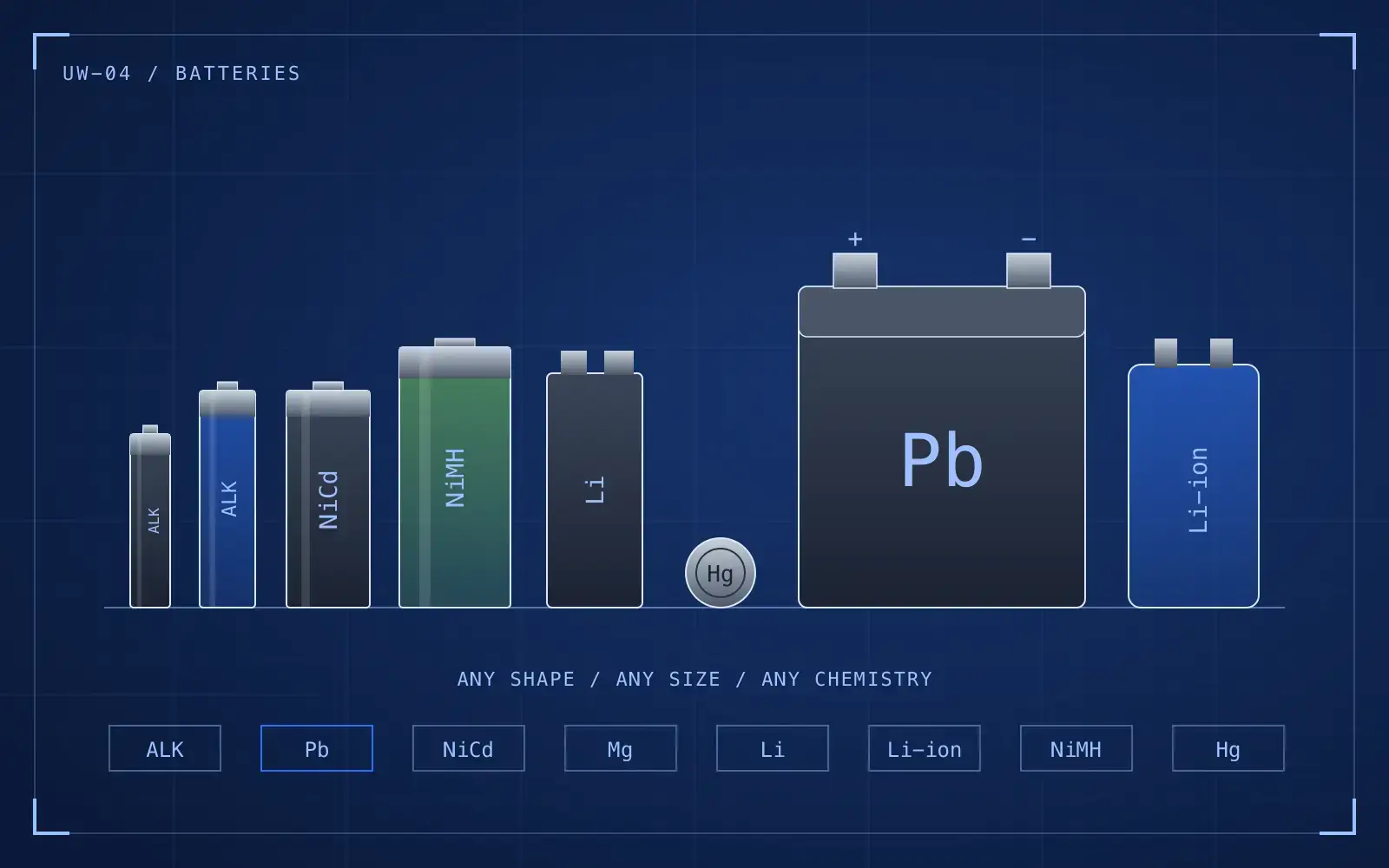
Open the supply closet in almost any busy building and there's a shoebox on the shelf that everyone calls the dead battery box. It started with a few AAs from the remotes. Now it holds a drill pack, a coin cell, a lantern battery and something nobody can identify. Everybody adds to it, nobody owns it, and sooner or later someone has to decide what to do with the whole mess. A little sorting and a decent container, set up before the pickup, make that day easy.
Know what you're storing
We take batteries of any shape, size or chemical composition. The types we accept include alkaline, lead acid, nickel cadmium (NiCd), magnesium, lithium, lithium-ion (Li-ion), nickel metal hydride (NiMH) and mercury batteries, and that list isn't the limit. You don't need a chemistry degree to sort them. Most batteries print the type right on the label, and a quick look at the case usually settles it. When it doesn't, put the unknowns in their own container and tell us when you call.
Where the batteries come from tells you what to expect. A school science room, a maintenance shop and an alarm contractor will each end up with a different mix. Phones, laptops and cordless tools lean toward lithium-ion. Emergency lights and older equipment often lean toward lead acid or NiCd. Looking at your sources for a week or two tells you which containers you'll need before the pile gets out of hand.
The reason to sort is that different batteries behave differently when they're stored badly. A loose alkaline cell is a minor thing. A car or forklift battery is heavy and holds acid. A lithium cell that's been dropped or crushed can overheat, which is a very different problem. Keeping chemistries apart means one bad cell doesn't affect its neighbors, and it makes the pickup faster.
Sorting, taping and containers
Start with a few labeled containers instead of one big bin. We stock a large selection of containers made for storing spent batteries, so ask us when you set up a program and we'll point you to what fits your volume. In the meantime, a sturdy plastic pail with a lid works for small cells, as long as it's dry and the inside isn't bare metal where terminals could touch.
- Tape over the terminals on lithium and 9-volt batteries so they can't touch each other or anything metal.
- Keep lead acid batteries upright, on a pallet or tray, and away from other chemistries.
- Put damaged, swollen or leaking cells in their own container, away from everything else.
- Keep lithium and lithium-ion in a separate container from the rest of the pile.
- Write the type and the date you started the container on the lid.
Damaged lithium cells deserve extra care. A battery that's swollen, hot, dented or leaking should be set apart right away, in a container that won't burn, away from anything flammable and away from foot traffic. Don't try to charge it again, and don't toss it in with the others to deal with later. If you're not sure how to handle a particular damaged pack, call before you move it.
Where to keep the containers
Pick a dry, cool spot with a hard floor, away from heat sources, direct sun and busy walkways. A back storage room beats the loading dock, where rain and a forklift can both cause problems. Keep containers closed between drop-offs, and keep them where only a few people can add to them. A low shelf is better than a high one, since heavy batteries are easier to lift when you aren't reaching overhead.
Set a simple rule: spent batteries go in the containers the day they come out of a device, not whenever someone gets around to it. The cells that sit loose in drawers and on desks are the ones that end up in the regular trash by accident.
Choosing when to call
Don't wait until the container overflows. A good habit is to call when it's most of the way full, or when a fresh batch arrives from a bigger job like an equipment replacement. A container that's easy to lift is also a container that's safe to move, and an overstuffed corner of mixed cells is nobody's idea of an easy pickup.
How long your own site can hold batteries before they ship out depends on rules for your type of operation, so check with TCEQ or ask us. We collect in most cases within 48 hours, offer same day pick up, and can set a weekly, monthly or daily on-site schedule for places where batteries show up steadily. Call U-Waste Recycling Solutions at 713-360-7310 and tell us which chemistries you've got.
U-Waste Recycling Solutions, 713-360-7310
Call 713-360-7310More articles
Why Spent Fluorescent Tubes Don't Belong in the Dumpster
A short look at why old lamps get their own pickup, and the simple way to box them so they leave your building in one piece.
Planning Collection for Lamps and Ballasts in a Lighting Retrofit
Old fixtures give up two very different kinds of material on the same day, and each needs its own plan.